


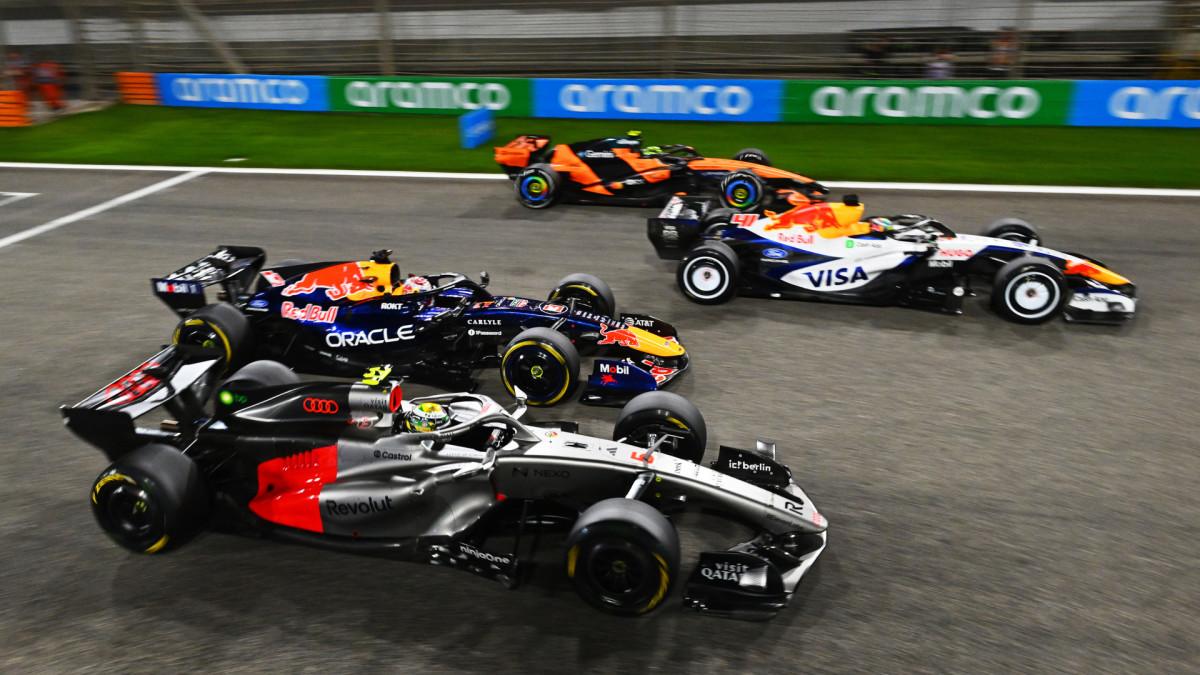

Beyond the fast cars and high-stakes races, Formula 1 (F1) has evolved into a global business platform synonymous with luxury and premium brand partnerships.
With a rapidly expanding global audience and growing commercial demand, the sport’s momentum shows no signs of slowing.
Now, the motorsport is positioning itself as one of the fastest-growing commercial properties, drawing significant investment from global brands and strengthening its value within the sports and media economy.
While traditional assets such as equities remain core investment opportunities, F1 is becoming a significant commercial platform attracting sponsors, media companies, and investors alike.
Formula 1 sponsorship spend to exceed $3 billion
Total sponsorship investment in F1 is expected to rise 15% year over year, increasing from $2.5 billion in 2025 to more than $3 billion in 2026, according to the latest Ampere Analysis study.
The growth reflects F1’s transition from a traditional motorsport into a global media and marketing platform, with technology and apparel brands emerging as primary drivers.
F1 is owned by Liberty Media Corporation (LLYVK). F1 year-end 2025 revenue increased 14% to $3.9 billion, driven by strong partnerships and digital advertising growth.
“F1 once again delivered an exceptional year, with the sport firing on all cylinders across growth, engagement, and commercial momentum. We renewed with multiple long-term existing partners and signed several new marketing partners,” said Liberty Media CEO Derek Chang in an earnings call.
Technology brands lead F1 growth
The technology sector alone has already committed more than $565 million in F1 sponsorship spending. Major players such as Hewlett-Packard Enterprise and Oracle account for 24% of total technology-related growth.
Artificial Intelligence (AI) partnerships are accelerating rapidly. In the past six months, eight new deals have been signed, including collaborations with Groq, Meta AI (META), and Anthropic.
For technology companies, F1 is a high-performance global stage for innovation, data analytics, and advanced computing capabilities.
F1 sportswear and fashion investments surge
Sportswear and fashion brands have increased their F1 sponsorship spending by 75% over the past two years, with at least seven major deals beginning in 2026 alone.
Major 2026 apparel partnerships
- Puma and Adidas (ADDDF): New multi-year partnerships totaling $140 million, according to Ampere Analysis, Puma, and Adidas
- Tommy Hilfiger (PVH): Official team kit supplier for the Cadillac Formula 1 Team
- New Era: New multi-year deal with Williams Racing
- Castore: New multi-year partnership with Haas F1 Team
- HUGO: Continued collaboration with Visa Cash App Racing Bulls (VCARB) Formula One Team
- LVMH: Entered year two of its 10-year global partnership with F1
The U.S. market growth drives new investments
Formula 1’s global fan base reached 827 million in 2025, up 12% year over year, according to Formula 1 2025 season data.
In the U.S., media expansion has played a key role. Since F1 returned to ESPN Networks in 2018, average race viewership has climbed from 554,000 to 1.3 million per race in 2025, a 135% increase, according to ESPN.
Due to this growth, sponsorship investments from U.S.-based companies have risen 68% since 2023, according to Ampere Analysis.
From ultra-wealthy audiences to younger fans
Historically, F1 targeted high-net-worth audiences, reflected in premium ticket pricing that can range from $150 to more than $2,000 for general admission and exceed $20,000 for ultra-VIP experiences, depending on the race location, according to SeatGeek.
Former F1 CEO Bernie Ecclestone once emphasized the sport’s focus on affluent consumers in a 2014 interview, stating it was pointless to chase a younger audience.
“I’d rather get to the 70-year-old guy who’s got plenty of cash,” said Ecclestone. “There’s no point trying to reach these kids because they won’t buy any of the products here and if marketers are aiming at this audience, then maybe they should advertise with Disney.”
More F1 Business News:
- Why Cadillac decided to work with a fashion icon
- Luxury brand shares surprising F1 partnership
- Disney and Mickey Mouse take on Formula 1
However, relying solely on ultra-wealthy audiences limited long-term growth.
This is why F1 has shifted its strategy in recent years toward younger, more digitally engaged fans, with two main partnerships helping reshape the sport’s demographic.
Media partnerships to accelerate younger audience engagement
- Netflix (NFLX): Launched Formula 1: Drive to Survive in 2019, releasing its 8th season on Feb. 27, 2026, per Netflix
- The Walt Disney Company (DIS): Multi-year “Fuel the Magic” collaboration featuring immersive Grand Prix experiences, co-branded merchandise, and an F1-inspired comics series
These initiatives have expanded F1’s reach among younger audiences.
Younger fans become “silent investors”
Approximately 43% of the total fanbase was under 35, up 51 million year over year, with 57% of all new fans under 35 in 2025, according to Formula 1 2025 season numbers.
More than four million children aged 8-12 now actively follow the sport across the U.S. and the EU, with 54% of TikTok followers and 40% of Instagram followers being under 25, according to Formula 1 2025 data.
Younger fans’ engagement is beginning to transform into commercial impact. According to a Formula 1 U.S. market survey, 37% have purchased F1 merchandise, and 39% of Gen Z respondents say they’re more likely to consider an F1 sponsor’s product.
National Motorsport Academy content specialist Lewis Hallett says brands are drawn to F1 because of the emotional connection fans have with the sport.
“If sponsors can strike an emotional connection with them, then this could help make the fans advocates of their brand too,” said Hallett. “This can lead to a positive impact on sales figures, as well as lessen the effectiveness of their competitor’s marketing activities.”
What this means for sports investors
With continuous audience growth and sponsorship expansion across existing and new consumer sectors, F1 is positioning itself as one of the most commercially dynamic properties in global sport.
Sponsorship revenue across major sports leagues
- NFL: $2.7 billion for 2025 season, according to Sports Business Journal
- NBA: $1.62 billion 2024-2025 season, per Forbes
- MLB: $2.05 billion 2025 season, reported Forbes
- EPL: $2.02 billion 2024-2025 season, noted Sportcal
Related: Sam’s Club revives shuttered activewear brand, offers lower prices