



After nearly seven years off the menu, Starbucks is reportedly bringing back one of its most requested summer beverages, signaling a notable shift in how the company balances nostalgia-driven offerings with modern menu innovation.
Following years of rotating limited-time drinks and discontinuing legacy items, the coffee giant now appears to be responding more directly to sustained customer demand by reviving fan favorites with proven popularity. The strategy reflects a broader effort to strengthen brand affinity among longtime customers while introducing iconic flavors to new audiences.
For many Starbucks customers, the return of these beverages extends beyond seasonal marketing. It taps into long-standing brand nostalgia, reconnecting consumers with some of the company’s most recognizable and culturally resonant menu items.
At the same time, the reintroduction of legacy flavors in updated formats gives newer customers an opportunity to experience beverages that previously developed a cult-like following among Starbucks enthusiasts.
Starbucks bringing back an iconic Frappuccino, launching new variation
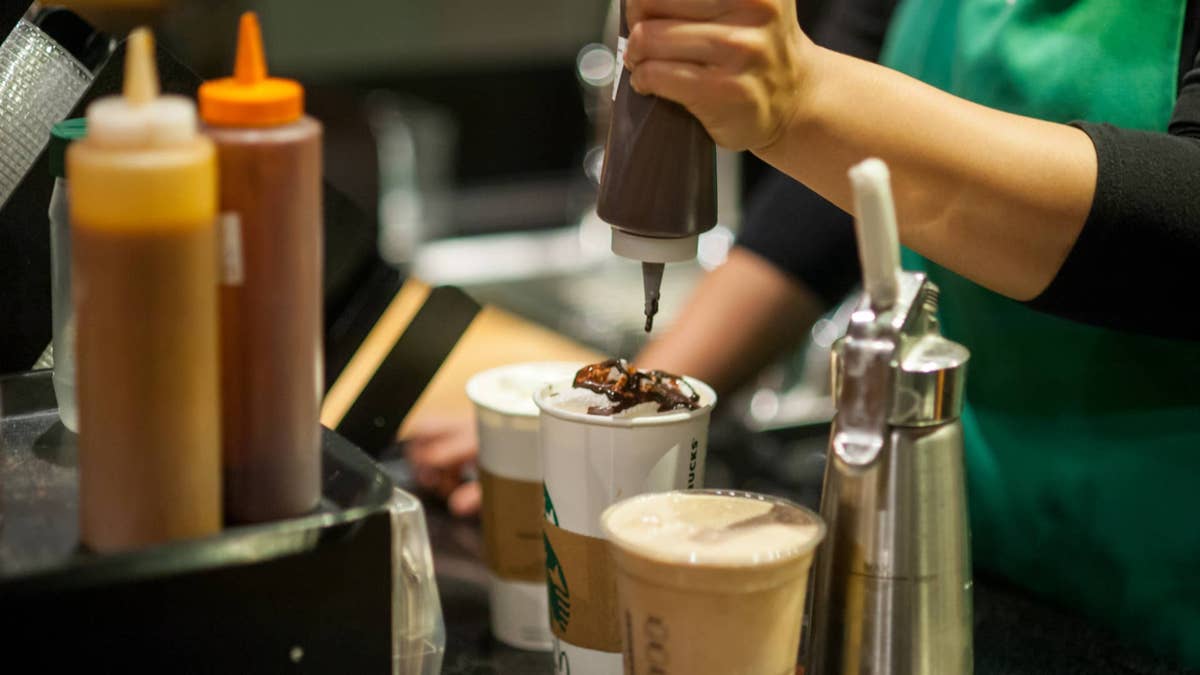
Starbucks (SBUX) is reportedly planning to bring back the fan-favorite S’mores Frappuccino, discontinued in 2019, alongside a new s’mores-inspired cold brew beverage at participating U.S. locations beginning June 30, 2026.
The information was first shared by a Starbucks employee and reported by food industry insider @Markie_Devo. However, Starbucks has not yet publicly confirmed the launch.
The upcoming releases include:
- S’mores Frappuccino (returning): A blended beverage featuring marshmallow-infused whipped cream, milk chocolate sauce, coffee, milk, ice, and a graham cracker crumble.
- S’mores Cold Brew (new): A cold brew-based drink topped with marshmallow-flavored cold foam, milk chocolate sauce, and a graham cracker crumble, offering a fresh take on the classic flavor profile.
Starbucks’ strategy centers on nostalgia, efficiency, and innovation
The product rollouts align closely with Starbucks’ “Back to Starbucks” strategy, a company-wide initiative focused on strengthening brand identity, improving operational efficiency, and enhancing the customer experience.
According to Starbucks, the strategy centers on several key priorities:
- Modernizing beverages and food offerings
- Simplifying the menu to improve speed and consistency
- Enhancing store design and operational efficiency
- Reinforcing coffee quality and craftsmanship
- Empowering baristas to improve service execution
As part of these restructuring efforts, Starbucks has streamlined parts of its menu, reduced operational complexity, and removed additional charges for milk alternatives.
Earlier in 2025, the company discontinued nine Frappuccino varieties, along with additional beverages and food items. While the changes initially drew customer criticism, they also created space for more focused product launches built around high-demand, recognizable flavors.
Why the S’mores Frappuccino return matters
The timing of the reported S’mores Frappuccino’s return comes as Starbucks continues working through uneven traffic and sales trends across key markets.
Recent quarters have shown a renewed emphasis on products with proven consumer demand rather than the frequent introduction of entirely new beverages. Industry experts note that this approach reduces risk while increasing the likelihood of repeat purchases, particularly in a more cautious consumer spending environment.
Limited-time offerings tied to nostalgia also tend to perform well in generating urgency, social media engagement, and seasonal traffic spikes, especially when compared with unfamiliar product launches.
Here’s some of my previous coverage of Starbucks menu revivals and launches:
- Starbucks drops another summer surprise as competition heats up
- Starbucks shares summer menu with returning favorites, new drinks
- Starbucks brings back two viral drinks not seen in nearly a decade
“The strategy makes sense when you consider how people interact with food online now. Social media thrives on novelty, urgency, and participation,” wrote Delish food expert Steven Morea. “A permanent menu item can quietly exist for years with minimal fanfare. An item available ‘while supplies last’ immediately becomes content.”
“The scarcity itself is part of the appeal,” Morea added. “Consumers are far more likely to try something if they think it could disappear in a month, and restaurant executives know this.”
The strategy reflects a broader trend across the restaurant and beverage industry, where major competitors, including McDonald’s (MCD), Dunkin’, and Dutch Bros. (BROS), have increasingly leaned on returning favorites and limited-time drops to drive engagement and in-store visits.
Starbucks’ early performance trends mark business turnaround
While Starbucks has not attributed performance gains to any single product cycle, recent financial results show improving momentum for the company.
In the second quarter of fiscal 2026, Starbucks reported:
- North America comparable store sales increased 7.1% year over year.
- Transactions rose 4.4%.
- Average ticket size grew 2.6%.
“Our second quarter marked the turn in our turnaround as our ‘Back to Starbucks’ plan drove both top and bottom line growth,” said Starbucks CEO Brian Niccol in an earnings statement. “This is the Starbucks our customers deserve and the Starbucks we believe will deliver long-term growth and value.”
Starbucks CFO Cathy Smith also noted that the company sees a clear path toward translating improved customer traffic into sustained earnings growth as operational changes continue to take effect.
Third-party foot traffic data also supports the trend. Starbucks experienced an average traffic decline of 0.6% during the first half of 2025. However, monthly visits increased 1.6% during the first five months of the second half, according to Placer.ai data.
That represents a major improvement from the fourth quarter of 2024, when visits were down 2.9% year over year.
Placer.ai CMO and industry expert Ethan Chernofsky believes Starbucks continues to have a unique ability to generate customer urgency through seasonal and limited-time offerings.
“The new strategy sounded exciting, there’s real evidence that it’s working, and the chain has maintained its unique hold on the calendar and an industry-leading ability to drive urgency and visits almost at the flick of a switch,” said Chernofsky.
“[We have] lots of reasons to expect the Starbucks recovery to continue gaining momentum,” he added.
Starbucks has a track record of reviving popular menu items
The S’mores Frappuccino is not the first example of Starbucks bringing back customer favorites and will join a growing list of revived menu items since 2025.
Examples include:
- Eggnog Latte: A holiday staple originally introduced in the 1980s and discontinued in 2021, according to Starbucks
- Chestnut Praline Latte: A seasonal favorite first launched in 2014 that has periodically returned due to customer demand, per Starbucks.
- Raspberry Syrup: A popular customization option from the early 2000s, reintroduced permanently after its 2023 removal, according to Starbucks
- Apple Crisp drinks: A seasonal lineup introduced in 2021 that has returned following strong customer response, Starbucks shared
- Unicorn Frappuccino: A viral beverage first introduced in 2017 that made a limited return during the 2026 Coachella Valley Music and Arts Festival, TheStreet reported.
These reintroductions highlight that while innovation can attract attention, familiarity often drives sustained customer loyalty and repeat purchasing behavior.
What this means for Starbucks customers
For customers, the return of the S’mores Frappuccino alongside a new cold brew variation signals a more curated and selective approach to menu development.
Rather than constantly introducing entirely new products, Starbucks appears to be focusing on a balance between proven customer favorites and innovation. This strategy may simplify customer decision-making while increasing the likelihood that returning visitors will find familiar, high-demand beverages on the menu.
As Starbucks continues refining its in-store experience and product lineup, nostalgia-driven releases like this may play a more important role in sustaining engagement, reinforcing brand identity, and driving repeat traffic across key seasonal periods.