



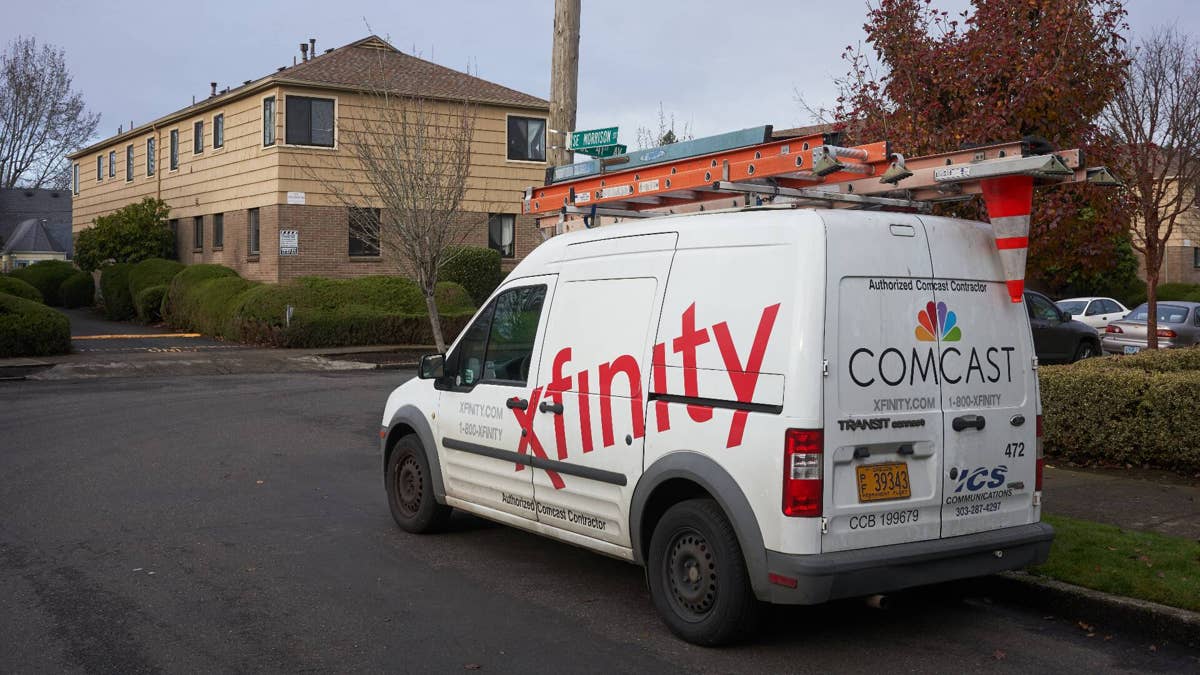

Comcast, which owns Xfinity, is betting big on a slate of generous offers to deter customers from ditching its internet services.
In the second quarter of 2026, Comcast lost 167,000 U.S. broadband customers, and revenue in this segment declined by 5.5% year over year, according to its latest earnings report. The losses come as the company works to win back customers after raising prices on its Xfinity services last year, a move that sparked backlash.
It is also struggling to navigate heightened competition from wireless carriers that offer fixed wireless access and fiber internet services. SpaceX’s Starlink, which has attracted over 9 million customers to its satellite internet service, is also becoming a growing threat to Comcast.
“The U.S. broadband duopoly of cable and telcos is fading as fixed wireless, Starlink, WISPs (wireless internet service providers), and fiber overbuilders expand rapidly,” said Jeff Moore, principal of Wave7 Research, in a RCR Wireless News report in May.
“Increased competition from carriers and alternative providers is giving consumers more choices, wider availability, easier setup, and lower prices,” he continued.
Comcast bets on converged offers to win customers
As it faces growing pressures in the broadband market, Comcast is relying on its converged wireless and internet offerings, which include monthly discounts, to win back customers.
The company kicked off this strategy last year by attaching a free Xfinity Mobile line offer to its internet plans. At the time, it also lowered everyday prices for these plans and added one-year and five-year price-lock guarantees, new speed tiers and unlimited data.
During an earnings call on July 23, Comcast Chief Financial Officer Jason Armstrong said that despite recent broadband customer losses, the company is seeing “encouraging signs from these actions,” which includes its decision not to raise internet plan rates earlier this year.
“Broadband subscriber losses improved by 34,000 year-over-year to a loss of 167,000,” said Armstrong. “That improvement reflects continued traction from our new go-to-market strategy even as we continue to operate in a highly competitive environment across our footprint.”
Related: Comcast eyes acquisition of 33-year-old rival amid struggles
He said that internet customers continue to migrate to higher-tier plans, with about 45% now on gig-plus tiers. He also highlighted that customers are “increasingly choosing converged broadband and wireless offerings.”
“The free line offer is doing what we intended,” said Armstrong. “It’s building awareness, it’s driving attachment, and it’s expanding the base of customers we can convert into paying wireless relationships over time. Most importantly, this is a product that provides real value across a range of customer segments.”
As more U.S. consumers nationwide hunt for savings amid economic uncertainty, many have been finding bundled mobile and internet deals attractive.
A survey by Optimum last year found that 80% of Americans consider bundling internet and mobile services more cost-effective than paying for each service separately. Also, roughly 1 in 4 U.S. consumers is likely to sign up for a bundled plan this year.
“The desire for cost-effective options that simplify billing and provide added value is a significant motivator for consumers when choosing bundled services,” said Gabriel Torres, vice president of mobile product management at Optimum, in a statement to CableTV.com last year.
Comcast’s top competitors are also leaning further into offering bundled services to capitalize on this rising consumer trend.
In March, AT&T launched its OneConnect subscription, which offers customers combined wireless and fiber internet service for $90 per month.
Verizon followed suit in June by introducing its Verizon One plan, which includes mobile and home internet service for $70 per month.
Amid rising competition in the convergence space, Armstrong said Comcast has a leg up on its rivals in offering these deals.
“We believe we have a strong position to compete in convergence,” said Armstrong. “We have the largest converged footprint offering gig-plus broadband and wireless ubiquitously, and our product experience continues to receive external validation.”
Comcast faces rising broadband pressures
As Comcast bets big on its convergence strategy, Armstrong noted that the company operates in a “highly competitive” broadband market and it doesn’t expect the environment to change anytime soon.
“Fiber continues to expand, fixed wireless remains aggressive, satellite is emerging as another alternative and convergence-based promotional activity remains elevated across the industry,” said Armstrong. “We are operating under the assumption that the market will remain intensely competitive.”
Armstrong also acknowledged that Starlink’s rapid growth could soon intensify competition; however, Comcast doesn’t currently see the satellite internet provider as a significant rival.
“On Starlink specifically, I would say right now, we currently are not seeing them as a meaningful competitive factor in our markets,” he said. “But saying that we don’t take any comfort in that. We’re not complacent. We fully expect to see them as more of a competitor over time.”
More Telecom News:
- T-Mobile warns customers that a key service will double in price
- Verizon adds generous offers for customers after price increase
- Spectrum suffers heavy loss as customers ditch service
Starlink, which is powered by over 10,000 active satellites in orbit, has gained consumer interest for providing high-speed internet to remote, rural, and hard-to-reach locations where traditional cable, fiber, and DSL services fail to reach.
The satellite internet provider currently offers several plans for residential consumers, priced from $55 to $130, depending on speed. It also has internet plans specifically for consumers who camp, travel in RVs, and work on the go.
Starlink is currently upgrading its network by launching V3 satellites, which will provide customers with faster speeds, larger data capacity and lower latency, posing a major threat to telecom rivals.
“I think if you look at their trajectory in terms of capacity that they’re bringing online, which is, I think everybody is pretty well versed in at this point, they’re going to have significant capacity increases in the coming years, particularly expect to see them more in rural and underserved areas,” said Armstrong.
“I think that’s a core target market for them,” he continued. “And I think that’s realistic that we’re going to see them as more of a competitor in those markets.”
Despite facing tougher competition, Comcast is confident its cable broadband service can remain competitive as it focuses on improving price transparency and offering converged deals.
“Nothing beats a wire into the home,” said Armstrong. “That’s firmly what we believe here. We’re going to be 1 of 2 wires into the home. If you look at the long-term end state, our path on that wire is a multi-gig symmetrical path. Our network is an active network all the way into the home …”
“We actually love the fact that it’s active all the way into the home in an AI-driven world, having active components from headend to node to amps all the way into customer premise equipment, we actually think will be a big advantage in the long term,” he added.
Related: Comcast targets frustrated T-Mobile customers with free offer