




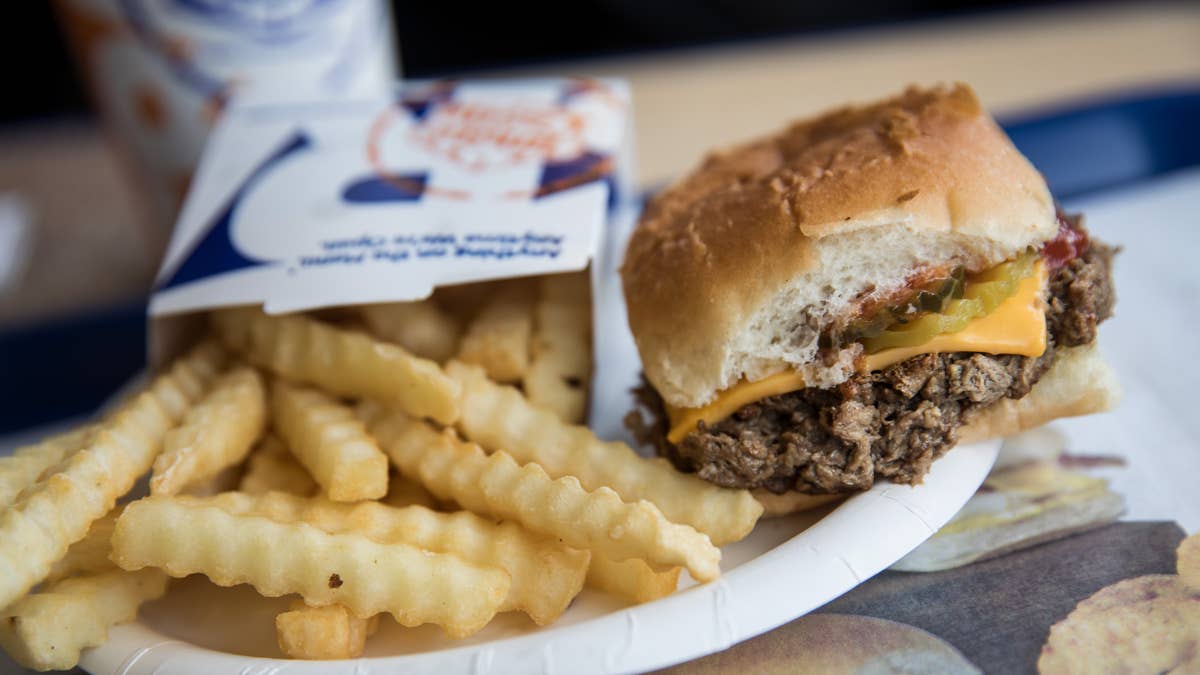

A longtime fast-food burger chain is preparing to close one of its oldest restaurants. Its distinctive blue-and-white exterior and signature structure will soon be demolished, ending nearly nine decades of service to generations of customers.
The shutdown comes as restaurant operators across the U.S. continue to face elevated labor, food, occupancy, and financing costs while also reassessing their real estate portfolios and long-term growth strategies. For established chains, individual locations are increasingly being evaluated not only on sales performance but also on the value of the underlying property.
Known for its small, square burgers, better known as sliders, White Castle was founded in 1921 in Wichita, Kansas. The company is widely recognized as the world’s first fast-food hamburger chain, and today operates more than 300 locations nationwide.
White Castle confirms closure of its 87-year-old restaurant
White Castle will permanently close its Elmhurst restaurant at 89-03 57th Ave in Queens, New York, on June 24, 2026, ending an 87-year run in the community.
According to Restaurant Manager Elsa Lima, the property has been sold and will be redeveloped into an apartment building, Queens Chronicle reported.
The move follows several other White Castle closures announced this year and comes as restaurant operators continue adapting to changing economics across the industry.
White Castle Chief Marketing Officer Jamie Richardson said the decision reflects the long-term value of the property, which has grown substantially over the years, and the company’s strategy to reinvest proceeds into future growth.
“When a change like this occurs, White Castle reinvests proceeds from the sale in continuing to grow our business overall, and to focus on remaining a great place to work,” said Richardson.
Richardson added that all affected Elmhurst employees will be offered opportunities to continue working at nearby White Castle locations.
The Elmhurst restaurant originally opened in 1939 and became one of White Castle’s longest-operating locations. It was rebuilt in 1963, updated again in the 2000s, and renovated as recently as last year, according to Forest Hills resident and historian Michael Perlman, as reported by Queens Chronicle.
The shutdown will remove one of the chain’s longest-running locations in New York and marks another example of how restaurant companies are increasingly balancing operating performance underlying real estate value.
Previous White Castle restaurant closures
The Elmhurst closure follows several other White Castle shutdowns in 2026, according to reports from KLAS 8 News Now and New York Locals.
Recent closures include:
- Casino Royale location: Closed March 30, 2026, at 3411 S Las Vegas Blvd, Las Vegas, Nevada
- Henderson location: Closed March 30, 2026, at 535 Marks St, Las Vegas, Nevada
- Cypress Hills location: Closed January 2026, at 3101 Atlantic Ave, Brooklyn, New York
Despite the closures, White Castle still operates approximately 28 locations across New York.
The New York shutdowns were largely tied to the rising property values and redevelopment opportunities, with residential projects planned for former restaurant sites.
Meanwhile, the Nevada closures stemmed from White Castle’s acquisition of locations previously operated by a local licensee. Following the transaction, the company retained three of its five restaurants that better aligned with its long-term corporate and financial strategy.
Restaurant industry faces persistent pressure
White Castle’s decision also comes at a time when restaurants continue to navigate rising operating costs, while consumers remain more selective in their discretionary spending.
According to the National Restaurant Association survey, 60% of restaurant operators reported lower customer traffic in December 2025, up from 51% the previous month.
At the same time, prices for food away from home increased 3.5% in the 12 months ending May 2026, according to the U.S. Bureau of Labor Statistics.
Industry analysts say consumers have become less willing to absorb menu price increases than in prior economic cycles.
“In strong economic environments, price increases have historically been tolerated by restaurant guests,” food industry executive James O’Reilly told FSR Magazine. “Over the past few years, that’s become far more difficult. While headline economic indicators have improved and financial markets have strengthened, many restaurant consumers, particularly in lower- and middle-income brackets, have not experienced the same relief.”
Restaurant economics remain challenging over the long term as well.
According to Oysterlink, around half of restaurants close within five years, and only 34.6% remain in business beyond a decade.
Meanwhile, food and labor expenses have each increased about 35% over the past five years, according to the National Restaurant Association.
What this closure signals for the restaurant industry
The closure of one of White Castle’s oldest restaurants reflects broader challenges reshaping the restaurant industry.
Here’s some of my previous coverage on restaurant closures:
- Fast-food burger pioneer chain closes its final location
- Regional pizza chain closes final restaurant after 51 years
- Popular Mexican chain closing all locations after Chapter 11 rescue
For decades, established chains relied on brand recognition, customer loyalty, and stable real estate footprints to support growth.
Today, operators are increasingly evaluating whether aging locations still fit their long-term economics and investment priorities. In some cases, that includes unlocking capital tied up in owned real estate rather than continuing restaurant operations in aging sites.
“Sale leaseback provides many benefits, including a highly attractive source of capital that provides multiple arbitrage and an efficient cost of capital,” wrote SLB Capital Advisors Partner Matt Wrobleski on QSR Magazine.
“Unlike the debt capital markets, the sale-leaseback market has been consistently open and is a reliable resource for restaurant operators with owned real estate.”
While White Castle continues to invest in its broader business, the Elmhurst closure illustrates that, across the industry, longevity alone is no longer enough to guarantee a location’s future.
Related: After bankruptcy, iconic seafood chain closes flagship restaurant